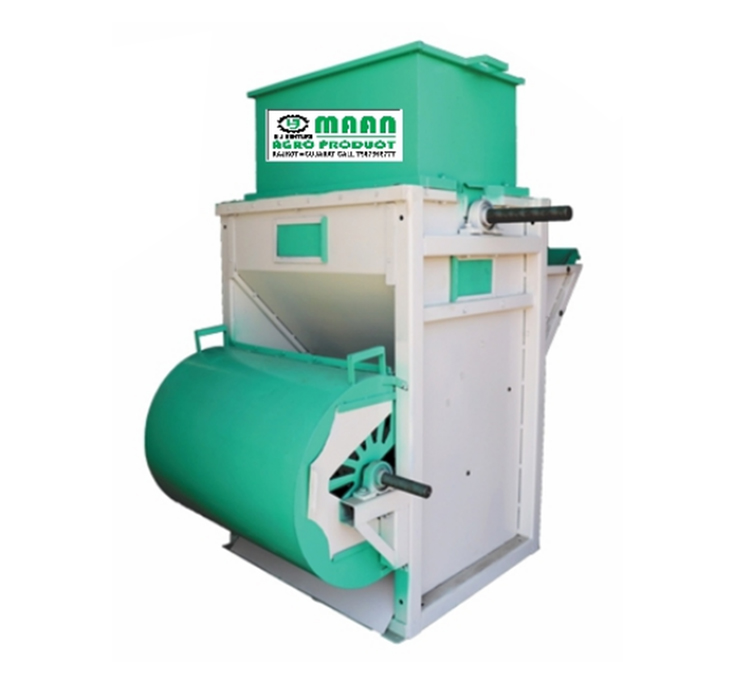
Groundnut Decoricator
Shelling Mechanism: Uses rotating blades, rollers, or beaters to crack the shells without damaging the kernels. Adjustable clearance to handle different groundnut sizes. Material: Made of durable materials like mild steel or stainless steel for longevity and resistance to wear. Rust-proof construction for processing food-grade materials. Power Source: Operates on electricity, diesel engines, or manual power, depending on the model. Power requirements typically range from 1 HP to 10 HP. Capacity: Varies by model, from small-scale (100-200 kg/hour) to industrial-scale (500-1500 kg/hour or more). Efficiency:Shelling efficiency ranges from 80% to 95%, depending on the machine's design and settings. Minimal kernel breakage (<5%). Size and Portability: Available in stationary or portable designs. Compact models for farms and larger models for processing units. Separation System: Integrated blower or fan separates the shells from the kernels. Ensures clean and de-shelled kernels ready for further processing. Specifications Output Capacity: 100-1500 kg/hour.Shelling Efficiency: 80-95%. Breakage Ratio: Less than 5%. Power Source: Electric motor (1-10 HP) or diesel engine. Weight: 100-500 kg (depending on size and model). Dimensions: Varies, typically around 1.2m x 1.5m x 1m for medium-sized machines. Applications Agri culture: Used by farmers to process harvested groundnuts. Agro Processing Units: Prepares kernels for oil extraction, roasting, or export. Food Industry: Supplies clean kernels for peanut butter, confectionery, and snack production.